I am no longer blogging here at Little Nuances, but I would love for you to join me on my author website www.leewarren.info.

Wednesday, May 31, 2006

One Night with Badlands

This past month has been "Metal Month" on VH1. Usually, when I'm watching the Kansas City Royals at night (yes, I know they are bad, but cut me some slack for sticking with my team), I'll flip through the stations during commercials. I've stopped on VH1 several times lately to watch whatever show they are broadcasting about heavy metal. I was quite the headbanger in my day – complete with long hair and bleached out tips.

A couple of nights ago, I saw a segment on Robbin Crosby, the lead guitarist from Ratt. Crosby is believed to have contracted AIDS by sharing needles with someone while doing heroine. He died in 2002. I was a big fan of Ratt, but seeing that segment reminded me of another group that I was into even more – Badlands, and how their lead singer, Ray Gillen, also died (in 1993) of AIDS.

Badlands only released two studio albums (a third was released after Gillen's death) and they were both full of great, hook-laden, bluesy rock songs that were nearly impossible to not get caught up in. I only saw the band live one time. I think it was 1991. They played in a bar in a bowling alley in Omaha, Nebraska that held probably no more than 350 people. The place was full that night, but not so much that you couldn't move. My friend and I were about 10 feet from the stage and from the opening song everybody seemed to be enamored with them.

About a third of the way through their set, I turned to my friend and said, "I've never heard a band sound so much like their albums." They nailed Show Me the Way, Love Don't Mean a Thing, and Dancing on the Edge. From the passion in Gillen's voice, to the perfect guitar licks laid down by Jake E. Lee, to the incredible bass playing of Greg Chaisson, they were so in sync that I had goose bumps. This was how music was supposed to sound live.

Toward the end of the show, they performed their big hit, Dreams in the Dark, and it too was incredible. I hated to see the show end. In fact, before the night was through, I knew that I'd just witnessed the best live show I'd ever seen – and I've seen a lot of them – many hundreds in fact. Something else struck me that night. I was in the process of figuring out what I believed spiritually at the time and so many of the band's lyrics spoke directly to me in a new way that night – even though I knew most of them by heart.

During Shine On, Gillen sang: "Oh my Lord, I've been a sinner / In my time I've seen my ways / And if I beg down on my knees / Would you hear these words I say / 'Cause in the dark I need your vision / Don't let this poor soul fade away." And during Streets Cry Freedom, Gillen sang: "There is no reason / For livin' in sin / I don't believe when they say hey boy, you better give in / You know I'll fight for what I know / Till the day that I die / 'Cause I'm better off dead / Then buried along with my pride."

They also covered the famous James Taylor tune, Fire and Rain. The hair on the back of my neck stood on end as Gillen sang the following lyrics with more passion than I've heard before or since from any performer, "Won't look down upon me Jesus / You've got to help me make a stand / I just can't make it through another day…" Standing in the middle of a bar, listening to a band that most Christians have never heard of, I felt closer to God than I'd ever felt before.

I don't know how that one night fits into the big scheme of things regarding my eventual spiritual walk towards Christianity, but it definitely fits into the mix. (I wrote an article for Light & Life magazine a couple of years ago about my journey if you are really interested in reading more.) I also don't know what Ray Gillen was thinking as he helped to pen lyrics that touched my soul. But I do know that Bassist Greg Chaisson went on to record music in the Christian music industry, so something spiritual was happening in the band.

I think most of us tend to shake our heads and wonder how rock stars (and various other famous people) who die as a result of bad choices, can make such poor decisions. The older I get, the more I tend to look at things the opposite way. I'm amazed that my own bad choices didn't come with a bigger cost to me.

Tuesday, May 30, 2006

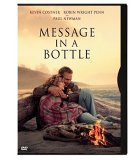
Message in a Bottle

We're on to my eighth favorite movie of all time in our Top 10 Tuesdays series.

Disclaimer: Unfortunately, writing about why certain movies move me the way they do without actually giving away the ending is not an easy task. And since none of my favorite movies are currently in theaters, I plan to talk about endings when the situation warrants it. I'll experiment with using a green font when speaking about the ending though—so if you've never seen one of these movies, but would like to after reading one of these posts, you'll know to stop reading when you see green wording.


#8: Message in a Bottle starring Kevin Costner (as Garret), Robin Wright Penn (as Theresa), and Paul Newman (as Dodge). Released in 1999.

Here's a blurb about the movie from WarnerBrothers.com: "Grieving widower Garret Blake builds boats for a living. Rebuilding his life—that's another matter. But that's before Theresa Osborne comes to his North Carolina village. Theresa, a lonely divorcee and researcher for the Chicago Tribune, knows that Garret is the author of the message she found inside a bottle on a Cape Code beach. And she knows the message spoke to her in away that profoundly touched her heart."

Yes, I have two movies in a row on my list that are based on Nichols Sparks' novels. I picked up the novel version of this particular story in a grocery store at the end of 1999. It was my first exposure to Nicholas Sparks. I've since bought every novel he's ever written—and I've read them all. Yes, he overuses adverbs. And yes, he tells sappy love stories. But his stories are so much more than that. They are anything but typical cookie-cutter chick-flicks.

Message in a Bottle (the movie) starts out with a shot of the sea carrying a message in a bottle that a man named Garret wrote to his now deceased wife. A woman named Theresa finds it while jogging on the beach. She opens the bottle and reads this:

Dear Catherine,

I'm sorry I haven't talked to you in a so long. I feel like I've been lost, no bearings, a little crazy, I guess. I've never been lost before. You were my true north. I could always steer for home when you were my home.

Forgive me for being so angry when you left. I still think some mistake's been made and I'm waiting for God to take it back. But I'm doing better now. The work helps me. Most of all, you help me. You came into my dream last night with that smile of yours that always held me like a lover, rocked me like a child. All I remember from the dream is a feeling of peace. I woke up with that feeling and tried to keep it alive as long as I could. I'm writing to tell you that I'm a journey towards the peace…

The letter goes on, but you get the gist of it. Theresa is enamored with the letter right away. And why wouldn't she be? She's divorced. Her ex-husband is remarried with a child. And she feels like she may never taste love again. And certainly not in the way the writer of this particular letter describes his love for his wife.

Theresa works in research for a newspaper and the newspaper decides to run the letter, and that causes other people to come forward with similar letters—several of which are signed by the same mysterious "G." With each new letter, Theresa becomes more intrigued by the man who wrote them. She starts to trace the letters (via the typewriter, the stationary, and the type of bottle) and she knows that she must go meet the author of such letters.

So, she jumps on a plane in Chicago and travels to the Outer Banks of North Carolina. She finds Garret working on a boat and he offers to take her sailing. After some rather stilted conversation, they begin to laugh at their awkwardness and thus begins their relationship. But, he still can't let go of his deceased wife (who's been dead for two years) and Theresa is she not all that sure she wants to uproot her life in Chicago—especially since she has a son.

They start to visit each other in the respective environments and they are headed for marriage—even though they had to deal with some very difficult issues (one of which is—Theresa didn't tell Garret about the letters—he found out on his own). After Garret finally decides that he can forgive her, he gets in his boat to do a little sailing, but tragically, his boat capsizes in a storm and he dies. (The book version is a little different, but he still dies in the end.)

When Theresa, visits Garret's house after his death, she discovers various artifacts from their relationship and she finds a letter Garret wrote to Catherine telling her that he'd found somebody to love as much as he'd loved her.

I found the ending to be both heartbreaking and satisfying—even though I think I'm in the minority. Yes, I would have loved to have seen them get together. But life is often about picking up the pieces and moving on after bad things happen. Garret had finally reached that point. So had Theresa. And as difficult as it was to watch her cry over the realization that she would indeed have ended up with Garret if he'd lived, she made this great point in the end…

"If some lives form a perfect circle, others take shape in ways we cannot predict or always understand. Loss has been a part of my journey, but it has always shown me what is precious. So has a love for which I can only be grateful."

Loss is part of everybody's journey and indeed loss shows us what is precious. Love is precious. People are precious. Letting go when the time has come is precious. And so is taking a risk. As a single guy, I love to live vicariously through other single characters on the big screen as they find love and ultimately "happiness." But that's not always realistic. So, I find great comfort and strength in watching other single characters who press on in spite of their setbacks.

Previous posts in this series:

#9, A Walk to Remember
#10, In Love and War

Friday, May 26, 2006

Thanks Mom

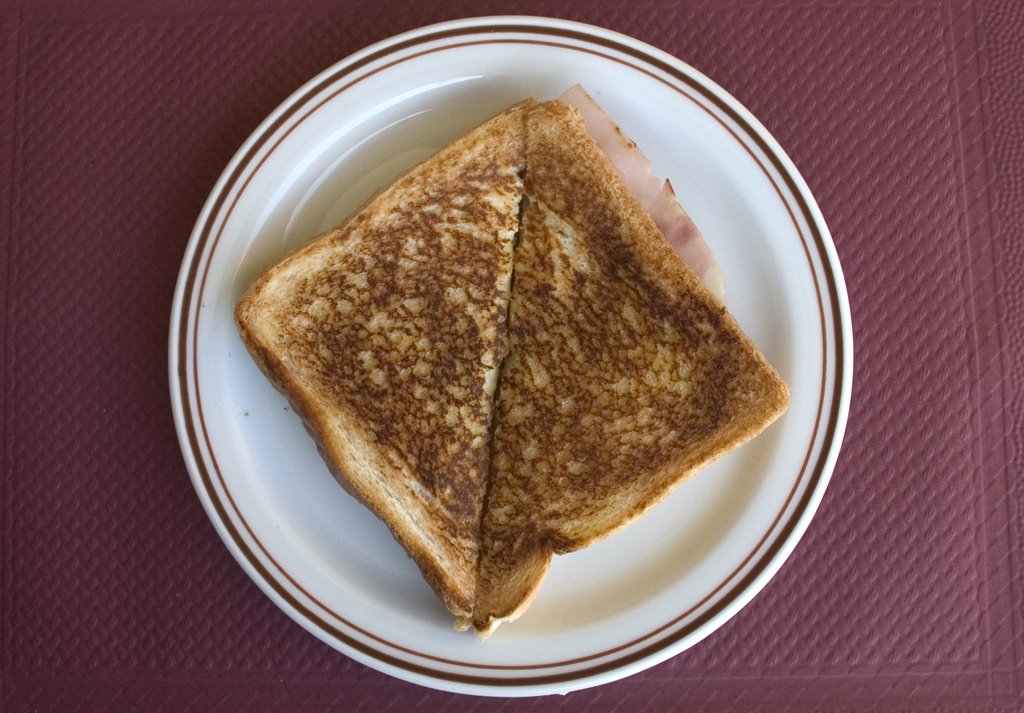
When I made a turkey sandwich for lunch yesterday, I had no idea how many memories it would evoke. I did what I always do after I'm done making a sandwich. I took a knife out of the drawer and I cut the sandwich from corner to corner to make two triangles side-by-side. Then I separated them and put a few chips in between. That's how my mom always did it when I was growing up—and cutting sandwiches that way now just seems natural to me.

I can't imagine cutting a sandwich any other way—or not cutting it at all. I don't even think it would taste right. Mostly because the taste has a lot to do with the memories of a person who lovingly made huge sacrifices for her children. My mom had a little help from my grandparents and a neighbor when she raised my sister and I after my parents divorced when I was eight years-old, but she made more sacrifices than my sister and I ever realized. I don't know that because she told me. I know it because she kept us clothed, and fed, and in a nice house, and somehow she still gave us a little spending money—all on the wages of a secretary.

I rarely saw Mom do anything for herself. Instead, I remember her doing the dishes or trying to keep up with the laundry, or cleaning the bathroom. She was always doing something—usually for my sister and I. She'd read the paper at night and then the three of us would settle in to watch various television sitcoms or the "movie of the week." We laughed. We shared popcorn (the kind where you actually had to cook on the stove—I think it was called Jiffy Pop). We laughed some more. And more than anything, I felt secure—the way a kid is supposed to feel.

Mom waited until my sister and I were adults before she remarried. On the day of her wedding, my mind was flooded with the many sacrifices she'd made for us. She took her lunch to work every day—cup-o-noodles—while at the same time giving my sister and I money to buy our lunches at school. She gave me money for baseball cards. She bought me a tennis racquet. She bought me Steelers and Royals clothing. I didn't need any of those things, but she did it because she knew I wanted them. She was willing to forgo things she surely wanted, and probably needed, just because she loved me.

This weekend, as we remember our fallen soldiers who died so we could be free, and as we remember relatives who have preceded us in death, let's not forget to remember the living and the sacrifices they've made for us as well. We don't say thank you often enough while we still have the opportunity to do so. But this weekend, I'm going to tell my mom thanks. And then I'm going to tell her that I won't forget the sacrifices she made for my sister and I. And then, we're going to share some steaks or burgers at a family picnic and just enjoy ourselves—just like the old days.

Thursday, May 25, 2006

Crossroads

I just finished reading a novel called Crossroads by Nancy Moser. It's about a woman named Madeline who makes a decision as a little girl to always live in the small town of Weaver, Kansas. But as she grows up, and people to go war, and businesses start to move out of town to survive, and others start to move to be near family, she sees the only life she ever imagined slipping away from her—so she buys up the entire town and gives it away to people she thinks would be a good fit for the community. The plot goes deeper than that, but I want to talk about one specific scene in the book that made me think.

About a third of the way into the book, a 16 year-old character named Ryan, is struggling to gain perspective. His family has just moved to Weaver to start over after the tragic death (in a car accident) of his sister Lisa. Ryan is a Christian, but he's angry with God, and he's not so sure that he wants the people of Weaver to even know that he's a Christian. In this particular scene, Ryan is staring out his bedroom window and contemplating what to do next.

Here are his thoughts: "This life in Weaver was a blank, empty page. Yet, maybe blank was better than the past pages that were full of scrawls, scribbles, and cross outs. Pages ripped and bent. Yellowed. Water stained. Blank was better than that. The trouble was, he had no idea how to fill the page…"

Blank pages have always appealed to me too. And the thought of filling them with imperfections has always bugged me. I've always been the type of person who only records ideas, and concepts, and plans once I've thought them all the way through. No need for cross outs. In fact, they are ugly and somehow I've always considered them to be the evidence of a cluttered mind. Ironically, in a different context, earlier in the book, Madeline says the same thing, "Strikeouts and messiness on the page indicate strikeouts and messiness in a life."

I'm not sure what changed my mind lately—maybe it's been my willingness to accept the fact that life is messy—but I find myself writing lists, and thoughts, and brainstorming work projects (all in my trusty moleskine notebook) with little regard for perfection or even completion. In a sense, I've given myself permission to record my jumbled thoughts and in the process I'm recording a history of my decision-making process—cross outs and all—which is quite satisfying to look back upon to see how they eventually all came together.

Wednesday, May 24, 2006

Tennis Anyone?

I went to see a tennis match last weekend and I had a great time watching it. A friend's 17 year-old son was playing in a tournament and I wanted to show a little support. If you've read this blog for any length of time, then you know how much I loved playing tennis as I grew up and how I wanted to play at a higher level some day. It never happened for me, but I still love the game.

When I got to the courts to watch my friend's son, I felt at home—even on the sidelines. Hearing the ball brushing off the racket strings. Watching players get into position for the next shot. Seeing them both trying different strategies. It all felt so natural to me. And the nice thing was—I didn't have to do any of the work myself.

I'm not one to let go of the past easily. Especially when it comes to elements of my past that I truly loved. Tennis has been one of those loves. But it's the next generation's turn to pick up the racket and pursue their tennis dreams. It's their turn to work hard, or not. It's their turn to learn the game, or not. It's their turn to shine, or not.

It's my turn to watch and simply enjoy the game for what it is—a beautiful tapestry of skill, athleticism, shot-making ability, strategy, and emotion. Yeah, I'll still talk about what might have been to anybody who will listen, but then I'll settle back and experience the game—because no matter whether I'm playing it or watching it, it's still holds a certain allure over me and I have no intentions of giving it up any time soon.

Tuesday, May 23, 2006

A Walk to Remember

Continuing on with Top 10 Tuesdays, we're up to my ninth favorite movie of all-time.

Disclaimer: Unfortunately, writing about why certain movies move me the way they do without actually giving away the ending is not an easy task. And since none of my favorite movies are currently in theaters, I plan to talk about endings when the situation warrants it. I'll experiment with using a green font when speaking about the ending though—so if you've never seen one of these movies, but would like to after reading one of these posts, you'll know to stop reading when you see green wording.

#9: A Walk to Remember, starring Mandy Moore and Shane West. Released in 2002.

Here's a blurb about the movie from MovieWeb.com: "Based on the 1999 novel by Nicholas Sparks, which was set in the 1950s, the story is about a modern-day small-town romance in North Carolina between two teenagers: the only son of a wealthy family and the town minister's quiet daughter. When they both join the town's Christmas pageant, the unlikely pair meet and fall in love."

The post that you are about to read is adapted from an article I wrote for a website called Crosshome.com when I was their culture columnist several years ago.

Pop singer Mandy Moore plays the part of Jamie Sullivan, a young Christian woman who is dying of Leukemia. She doesn't tell anybody about her illness because she just wants to be treated like everybody else, but ironically, her classmates reject her because of her plain appearance and her Christian faith.

Enter, Landon Carter, a senior who hangs out with the in-crowd who is only concerned about having fun. After his crowd pulls a prank on a schoolmate, Landon ends up in trouble and part of his punishment is tutoring children—the same children that Jamie willingly tutors. The other part of his punishment is to play a role in the school's upcoming play, of which Jamie is also a willing participant.

While studying lines together (in secret because Landon doesn't want anybody to know), Landon begins to fall for Jamie, but he falls head over heals for her during the play as Jamie, all gussied up to play the part, sings a song that takes his breath away.

As they spend more time together, she notices that Landon is more open to listening to things that excite her than she ever imagined. He takes an interest in astronomy with her, in long walks through nature, and when she tells him about a list that she keeps of things she wants to do before her life is over, he sees a girl who wants to live life to it's fullest—a completely different lifestyle than he'd ever known.

As Landon changes, they both realize how attracted they are to each other. The problem is, Jamie hasn't told him that she's dying of Leukemia. When she finally does, instead of running away, he learns to embrace every moment to its fullest. So much so that he now knows what he must do—marry her in the church her parents were married in, and in the process fulfill her most savored wish.

The scene at the church is quite moving—even more so in the Nicholas Sparks' novel version of the story. Here's how it is described in his book (from Landon's point of view):
"My mom was in the front row, dabbing her eyes with her handkerchief when the 'Wedding March' began. The doors opened and I saw Jamie, seated in her wheelchair, a nurse by her side. With all the strength she had left, Jamie stood shakily as her father supported her. Then Jamie and Hegbert [her father] slowly made their way down the aisle, while everyone in the church sat silently in wonder. Halfway down the aisle, Jamie suddenly seemed to tire, and they stopped while she caught her breath. Her eyes closed, and for a moment I didn't think she could go on. I know that no more than ten or twelve seconds elapsed, but it seemed much longer, and finally she nodded slightly. With that, Jamie and Hegbert started moving again, and I felt my heart surge with pride.

"It was, I remembered thinking, the most difficult walk anyone ever had to make.

"In every way, a walk to remember.

"The nurse had rolled the wheelchair up front as Jamie and her father made their way toward me. When she finally reached my side, there were gasps of joy and everyone spontaneously began to clap…"

They exchanged vows, and then Landon makes this observation:

"I kissed Jamie softly as my mother began to cry, then held Jamie's hand in mine. In front of God and everyone else, I'd promised my love and devotion, in sickness and health, and I'd never felt so good about anything.

"It was, I remember, the most wonderful moment of my life."

Jamie dies soon after they are married and Landon goes to visits Jamie's father after some time has passed [I'd queue the movie to see how long it actually took, but unfortunately I've loaned out the movie and it hasn't made its way back to me yet]. He's not sad that he only got to spend a brief amount of time with the woman he loved. Instead, he's extremely thankful that he got those brief moments.

We spend so much of our lives trying to minimize risk and pain that we miss out moments like this. When in reality, nobody is guaranteed tomorrow. Or this afternoon. Or our next breath. Seeing a movie like this makes me want to be a bigger risk-taker because the next risk I take might just lead to the most wonderful moment of my life.

Previous posts in this series:

#10, In Love and War

LinkWithin

Related Posts Plugin for WordPress, Blogger...